
Product Category: Retail
“Our team spend a lot of time creating a strong brand image, and so it’s incredibly frustrating when we see it being used by counterfeiters as it makes it almost impossible for the uninitiated consumer to spot that they are fake.”
– Ben Stanbury, Marketing Manager.

The official Hornit YouTube channel: youtube.com/@TheHornitBikeHorn
Founded on innovation and smart product design, Hornit has grown from a single cycling safety product into a globally recognised cycling brand making children’s bikes and a range of accessories with distribution in multiple countries around the world.
Innovative products are prime hunting ground for counterfeiters; they actively seek them out and bring copies to market so they can capitalise on new consumer demand. Intellectual property (IP) protection became a critical tool for CEO Tom de Pelet to help the company defend its products, reputation, and future growth.
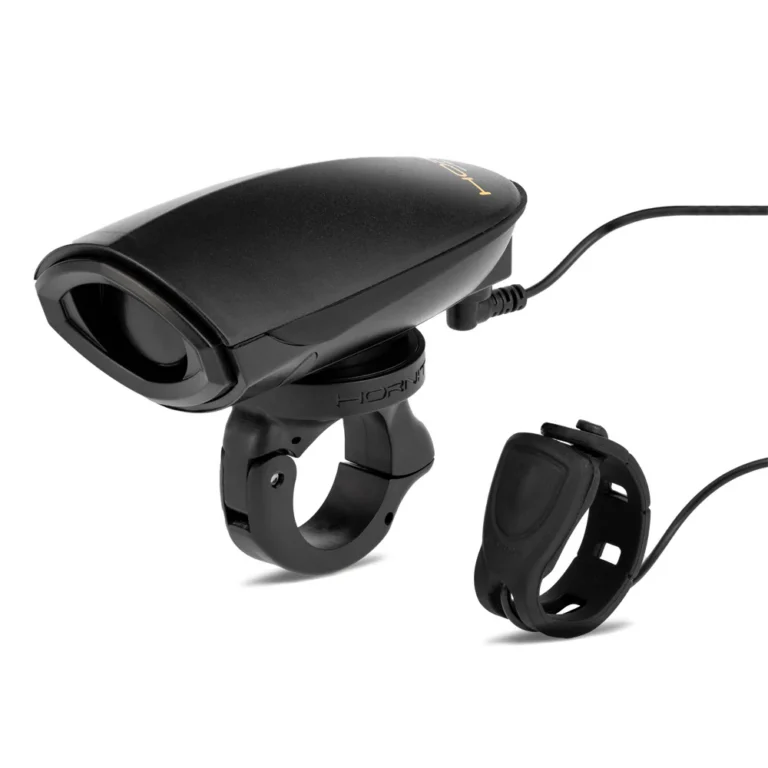
Hornit first made its mark with the Hornit dB140 — marketed as the world’s loudest bicycle horn. Designed to improve cyclist safety in busy urban environments, the product gave riders a practical way to alert drivers and pedestrians to their presence and put them in control of their safety.
Building on that success, the company expanded into a broader range of cycling products and accessories, including the CLUG, a minimalist wall-mounted bike rack described as the world’s smallest bike rack – a tagline chosen during the original Kickstarter campaign.
Unlike traditional bulky storage systems, the tiny CLUG grips a bike tyre while remaining almost invisible when not in use. Its sleek design, low cost of manufacture and high perceived value not only helped it stand out in a crowded market, but also made it incredibly attractive to counterfeiters.
As Hornit’s popularity grew, so did the number of counterfeit and imitation products appearing across online platforms. The counterfeiters were noticed by Hornit because they were stealing and re-using Hornit’s own marketing content and campaigns to sell the counterfeits.
“Our team spend a lot of time creating a strong brand image, and so it’s incredibly frustrating when we see it being used by counterfeiters as it makes it almost impossible for the uninitiated consumer to spot that they are fake.” Ben Stanbury, Marketing Manager.
To combat this, Tom ensured the company registered its intellectual property rights internationally, giving Hornit stronger legal protection across these multiple markets. This allowed the business to take action against fake sellers and unauthorized copies of its products, and initially this was managed in-house, but it quickly became a full time job, and take down requests were not always successful.
That’s when they decided to start working alongside brand protection specialists at SnapDragon, to proactively scrape and monitor online marketplaces and third-party websites for counterfeit listings. Outsourcing the identification and removal of fake products with a 96% take down success rate, meant that the company was able to better protect both its reputation and its customers’ trust by focusing on the customer experience of buying direct from the brand, and to educate them on testing and premium materials being used in the genuine branded products.
Tom’s advice would be on the importance of researching trademarks, patents, and design rights before launching or expanding a brand. Conducting searches early helped Hornit secure its brand name and avoided conflicts with existing registrations.
He also highlights the value of seeking professional legal advice when filing patents and trademarks, particularly given the complexity of IP law and international filing strategies.
According to Tom, investing in robust protection early is far less costly than trying to resolve infringement issues later or, worse still, discovering your IP is not properly registered.
One of Hornit’s key lessons was to plan IP protection with future growth in mind. Tom advises businesses to consider not only their current products and markets, but also areas they may expand into in the next 5 years.
By registering trademarks across additional product classes early on, companies can avoid the expense and complications of filing entirely new applications in the future.
This forward-looking strategy also enables the brand protection specialists at SnapDragon to start to expand monitoring well before a product is launched to market, helping to inform time to market and launch strategy to ensure online platforms are “clean” at launch, and remain that way afterwards.
According to CEO Tom de Pelet, investing in robust protection early is far less costly than trying to resolve infringement issues later or, worse still, discovering your IP is not properly registered.
- CEO, Tom De Pelet
Today, Hornit’s range extends well beyond bike horns and storage solutions. The company now offers children’s bikes, helmets, lighting products, and other cycling accessories, while continuing to invest heavily in product innovation and expansion.
For Hornit, intellectual property protection has not simply been a legal necessity — it serves to protect revenue as well as underpin the building and sustaining of a trusted global brand.

If you would like to explore how SnapDragon can accelerate your online brand protection, get in touch to schedule a demo.
We would love to hear from you, and show you what’s possible.
Get in touch today.