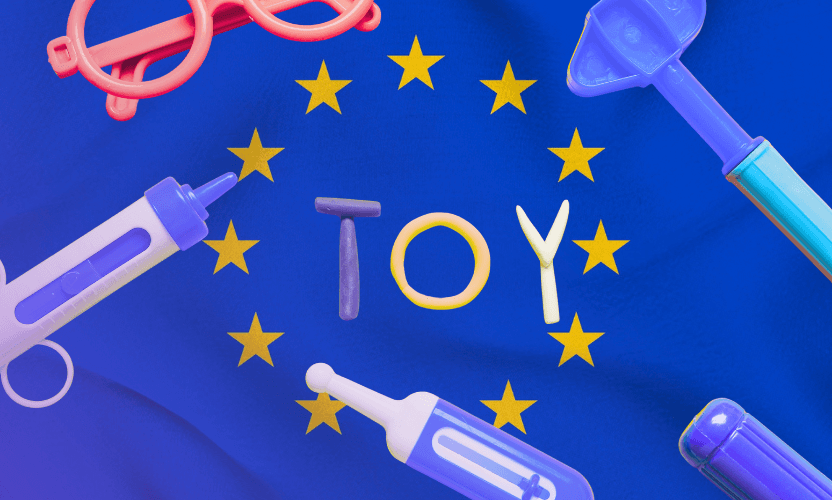

In 2025 there was a noticeable shift in counterfeit items that posed significant health and safety risks to consumers – from fake pharmaceuticals, automative parts, electrical products to children’s toys. The European Anti-Fraud Office led an effort in 2025 against fake and unsafe toys, seizing almost 11 million products sold online. Over 3.5 million items were confirmed as unsafe and posing serious health risks.
“Counterfeit toys are not just an infringement on intellectual property - they are a direct risk to children’s safety”
OLAF Acting Director-General Salla Saastamoinen
Counterfeiters used complex global shipping routes to small parcel shipments to evade detection, often moving small unassembled parts to put them together closer to the end consumer market.
Social media and e-commerce platforms were the primary avenues for selling these counterfeit goods, with professional looking listings and fake reviews created to deceive consumers.
As we move into 2026, tactics are evolving and shifting towards more sophisticated, technology-driven counterfeiting, making enforcement and consumer protection increasingly challenging.
The top 5 evolving counterfeit tactics and suggested strategies to combat them:
1. Combating Super Fakes
- Deploying advanced AI-powered authentication tools to analyse packaging, serial numbers, and product features.
- Implement blockchain-based product tracking for end-to-end supply chain transparency.
- Partner with manufacturers to embed secure, tamper-proof digital identifiers in products.
2. Addressing Clone Websites
- Use automated web monitoring and takedown services to identify and remove clone sites quickly.
- Educate consumers on how to verify legitimate websites from fake sites and enable them to report suspicious sites to you directly.
- Collaborate with domain registrars and hosting providers to shut down infringing domains by providing evidence of IP infringement.
3. Countering AI Impersonation and Deepfake Endorsements
- Develop and deploy AI tools to detect deepfake audio and video content.
- Register your brands and work with social media platforms to flag and remove accounts using AI-generated personas for fraudulent promotion.
- Educate consumers and influencers about the risks and signs of AI-driven impersonation.
“Illicit trade threatens public safety, undermines intellectual property rights and hampers economic growth, and the risks could increase as counterfeiters leverage new technologies and techniques to avoid detection. The OECD’s continued monitoring and mapping of the global trade in fakes shows the need for authorities to adopt new tools and step up their cooperation and information sharing.”
OECD Secretary-General Mathias Cormann
4. Disrupting Industrialised Networks
- Collaborate internationally to share intelligence on global counterfeiting operations and shipping patterns.
- Use AI-driven analytics to identify suspicious shipping routes and parcel delivery patterns.
- Advocate for stronger customs screening and real-time data sharing between authorities and marketplaces.
5. AI-generated product images and catalogues
- Traditional image-matching and reverse image search tools are no longer effective as AI can produce endless variations and new product images at scale. AI-powered detection tools can analyse image metadata, inconsistencies, and generative patterns that identify counterfeits.
- Cross-referencing product listings against verified manufacturer and seller databases.
- Encourage collaboration between platforms, brands, and authorities to share intelligence on emerging fake catalogues and listings.
- Deliver, or advocate consumer education on recognising signs of synthetic or non-existent products.
Online Brand Protection Recommendations for 2026:
- Invest in ongoing staff training on the latest counterfeiting tactics and technologies to enhance your chances of detection.
- Launch consumer awareness campaigns to help the public identify and avoid counterfeit goods.
SnapDragon safeguards your brand’s reputation and customer safety by deploying a comprehensive suite of anti-counterfeiting solutions:
-
Combatting Super Fakes: AI detects packaging and serial number anomalies, using secure digital identifiers for end-to-end supply chain transparency.
-
Neutralising Clone Sites: Automated monitoring identifies fraudulent domains instantly, enabling rapid takedowns with registrars while helping customers verify legitimate stores.
-
Countering AI Impersonation: Our specialised tools flag deepfake audio and video, working with social platforms to remove fraudulent personas before they erode consumer trust.
-
Disrupting Professional Networks: By sharing global intelligence and analysing suspicious shipping routes, we help customs authorities intercept large-scale counterfeiting operations at the border.
-
Detecting Synthetic Listings: As AI generates endless product image variations, our technology analyses metadata and generative patterns to identify and remove non-existent or fake products.
-
Using Digital Watermarking and invisible tagging in original designs to trace unauthorised reproductions by Print on Demand.
-
Advocating for Industry-Wide Standards and cooperation to address the speed and scale of AI-driven Print on Demand counterfeiting, such as proactive IP protection and stricter item production verification.

Laura Sodaymay
SnapDragon | Brand Protection Specialist
Want to see how SnapDragon’s AI can protect your brand?
If you would like to explore how SnapDragon can accelerate your online brand protection, get in touch to schedule a demo. We would love to show you what’s possible.