

Counterfeit jewellery has traditionally been associated with cheap imitations sold in market stalls or online marketplaces. Poor-quality metals, flimsy findings, and obvious design flaws meant that, with a little knowledge, most consumers could distinguish a counterfeit from the genuine article with ease.
Today, however, the counterfeiting landscape has changed. Increasingly convincing replicas are blurring the line between authentic and counterfeit products. Counterfeiters now mimic not only the appearance of luxury jewellery, but also the branding, marketing, and online shopping experience surrounding it. From imitation diamonds and misrepresented precious metals to AI-assisted “super clones”, counterfeit jewellery has become a sophisticated global threat capable of deceiving even knowledgeable buyers, creating complex intellectual property challenges for rights holders.
For today’s jewellery brands, protecting intellectual property starts with understanding how the threat has changed. In this article:
- we’ll examine how modern jewellery counterfeiting has evolved,
- the tactics brands should be watching out for and why they’re increasingly difficult to detect,
- as well as the steps luxury brands can take to strengthen their IP protection strategies through proactive monitoring and enforcement.
Why counterfeit jewellery is now a business risk
The growth of e-commerce has fundamentally changed the counterfeiting landscape. Online jewellery purchases increased by 37% during 2025, meaning counterfeiters now have unprecedented opportunities to directly reach consumers looking for luxury products (Business Research Insights).
At the same time, counterfeit quality has improved dramatically. No longer aimed solely at bargain hunters, today’s sophisticated replicas increasingly compete for higher-value purchases by closely imitating the packaging, marketing, and customer experience associated with established luxury brand houses.
The challenge is further complicated by the international nature of counterfeit supply chains. Manufacturing, fulfilment, and online sales often take place across multiple jurisdictions, requiring brands to work alongside online marketplaces, legal advisers, and customs authorities to disrupt counterfeit goods before they reach consumers. Recent action by U.S. Customs and Border Protection illustrates the scale of the challenge: officers intercepted more than 1,600 counterfeit Cartier, Tiffany & Co., and Van Cleef & Arpels jewellery items shipped from Hong Kong, that, if genuine, would have carried a retail value of more than $14 million.
For rights holders, the impact extends well beyond lost sales. These counterfeits divert legitimate revenue, erode brand equity and trust, and make intellectual property enforcement more complex than ever before.
Fake jewellery is becoming more convincing
Counterfeit jewellery has moved well beyond obvious knock-offs. Advances in manufacturing have enabled counterfeiters to produce pieces that closely resemble genuine products at first glance, making it increasingly difficult for consumers to distinguish authentic pieces from convincing imitations.
We’ve found that these deceptive techniques are often combined within a single listing, making online counterfeits particularly difficult to identify.
Some of the most common counterfeiting tactics we observe include:
- Passing off imitation gemstones as diamonds: Diamonds remain the world’s most highly prized commercial gemstone, and counterfeiters exploit this desirability by substituting lower-value stones such as cubic zirconia or moissanite, while charging premium prices. To the untrained eye, these stones can appear remarkably similar, but they lack a diamond’s durability, brilliance, and long-term value.
- Misrepresenting precious metals: Base metal alloys are often described using misleading language online to imply they are pure gold or silver. Terms such as “gold-filled” or “gold vermeil” can be presented ambiguously to confuse buyers about a product’s true composition.
- Falsifying hallmarks and certification: Counterfeiters may apply fake assay marks, false hallmarks, or imitation certificates to create the appearance of authenticity. While these markings can appear convincing, they offer no guarantee of the product’s provenance or quality.
- Reusing copyrighted brand assets: Counterfeiters often steal official product photography and other branded assets to create convincing listings that closely resemble those of legitimate retailers.
“Super clones” are challenging traditional authentication
For years, counterfeit products were synonymous with poor quality. Today, however, a new generation of so-called “super clones” is challenging that perception.
Most commonly associated with luxury watches, super clones are engineered to replicate not only the appearance of genuine timepieces but also their materials, construction, and mechanical movements.
According to research by the United States Gemological Institute (USGI), “super clone” watches can replicate the weight, high-precision movement architecture, and even the metallurgical composition of genuine models. At this level of sophistication, the subtle imperfections that distinguish a counterfeit may be invisible to the human eye – even to experienced authenticators.
Fortunately, however, AI is beginning to shift this imbalance. In USGI testing, Google Gemini’s advanced Computer Vision and Multimodal Image Analysis capabilities successfully identified both genuine and counterfeit watches using only photographs, detecting subtle inconsistencies that would be difficult for a person to identify unaided. While not yet a replacement for physical authentication, the research suggests AI is becoming an increasingly valuable first line of defence.
“The more sophisticated counterfeit products become, the more valuable it is for brands to talk about craftsmanship, origin and authenticity.”
Joseph Bua, Brand Protection Expert
As counterfeit quality improves, luxury brands face a much broader challenge than identifying fake products. If a counterfeit can closely imitate the quality and functionality of a genuine product for a fraction of the cost, many consumers will inevitably ask: why buy the original?
Brand managers understand that luxury has never been defined by materials alone. Heritage, craftsmanship, design innovation, and provenance are brand assets that cannot be replicated. Counterfeiters may imitate a product, but they cannot reproduce the decades — often centuries — of expertise, storytelling and reputation that give luxury brands their value.
Protecting those intangible assets is therefore just as important as protecting the products themselves.
Trade dress is as important as trademark
Counterfeiters are no longer satisfied with copying logos alone. Increasingly, they are replicating the distinctive visual identity that makes luxury jewellery instantly recognisable.
Iconic jewellery collections such as Cartier’s Love bracelet, Tiffany & Co.’s Return to Tiffany™, and Van Cleef & Arpels’ Alhambra have inspired countless imitations across online marketplaces and social media platforms. Search for “clover jewellery” online, for example, and you’ll find thousands of products — often of low quality — clearly inspired by the Alhambra motif. Rather than simply reproducing trademarks, counterfeiters seek to capitalise on the visual identity and consumer recognition these designs have spent decades cultivating.
This often extends beyond trademark infringement alone. Brands also need to enforce:
- Design rights: Where distinctive product designs, colours, or motifs are copied
- Copyright: Where product photography, marketing materials, or certificates of authenticity are copied.
Protecting luxury brands increasingly requires a multi-layered enforcement strategy that monitors and acts against unauthorised use of trade dress and other visual elements consumers instinctively associate with a brand.
Read our article on ‘Beyond Trademarks: Why Trade Dress Is Critical in the Era of Generative AI‘ to understand more about protecting your brand’s visual identity.
Digital visibility is shrinking the enforcement window
Luxury jewellery and watches have always benefited from celebrity endorsement, but social media has dramatically accelerated the speed at which trends emerge and spread.
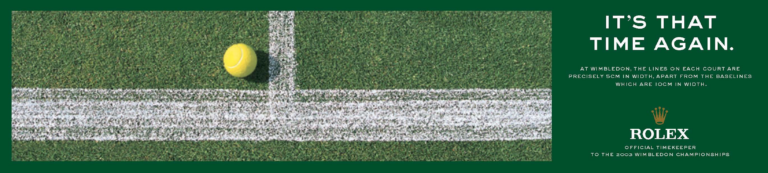
Major cultural events such as Wimbledon have become global showcases for luxury brands. Rolex has served as the tournament’s Official Timekeeper since 1978, with players and celebrity brand ambassadors generating worldwide attention for the watches and jewellery they wear courtside. The same pattern plays out across red carpets, fashion weeks and major award ceremonies, where a single appearance can propel a collection into the global spotlight.
High-resolution event photography, livestreamed broadcasts, and near-instant social media coverage now give counterfeiters immediate access to the latest designs. Rather than waiting for products to reach stores, they can begin producing replicas and publishing counterfeit listings within hours of a collection or product making its public debut.
And for luxury brands, these high-profile moments generate more than just marketing opportunities. They also create a critical window in which counterfeiters move quickly to capitalise on surging consumer demand. At SnapDragon we see how increased online visibility, especially across social media, is often followed by a surge in infringing listings, making rapid monitoring and enforcement essential.
Counterfeit buyer demographics have changed
It is often assumed that counterfeit goods primarily appeal to consumers seeking the cheapest possible alternative. Research suggests the reality is far more complex.
A recent study published in the Social Science Research Network (SSRN) journal has found that consumers at both the lowest and highest income levels are more likely to purchase counterfeit luxury products than those in middle-income groups.
What is interesting is that the motivations vary widely. Some buyers knowingly purchase replicas as fashion accessories or “travel” alternatives, while others believe they are purchasing genuine products through increasingly sophisticated online listings. Status, exclusivity, and social media influence all play a role, meaning counterfeit purchasing is no longer driven solely by affordability.
For luxury brands, this represents an important shift. Counterfeiting is no longer confined to one demographic, making consumer education and proactive online monitoring increasingly important.
AI is transforming the speed and scale of counterfeiting
Artificial intelligence is transforming many aspects of e-commerce, but it is also making it easier for counterfeiters to operate at scale. AI-powered tools can now generate realistic product photography, polished marketing copy, multilingual product descriptions, and even automated customer interactions through chatbots. When combined with increasingly sophisticated manufacturing techniques, these capabilities make fraudulent sellers more difficult than ever to distinguish from legitimate retailers.
As counterfeit networks become more agile, they can rapidly create new online storefronts, modify product listings to evade detection, and quickly replace listings that have been removed.
These networks also frequently operate across multiple jurisdictions, with manufacturing, fulfilment, and online sales all taking place in different countries.
Recent customs seizures of counterfeit luxury jewellery illustrate how international these supply chains have become, making coordinated enforcement increasingly important.
This constant adaptation significantly increases the challenge for luxury brands, placing greater pressure on them to protect their intellectual property, preserve brand integrity, and maintain consumer trust.
Staying ahead of digitally savvy counterfeiters
Counterfeit jewellery has entered a new era. What was once characterised by crude imitations sold in physical markets has evolved into a sophisticated ecosystem that combines advanced manufacturing, digital marketing, and emerging technologies to imitate some of the world’s most recognisable luxury brands.
As counterfeiters continue to refine their methods, protecting intellectual property requires more than traditional enforcement. It demands ongoing visibility across the online landscape, rapid identification of emerging threats, and the ability to respond before counterfeit products reach consumers.
For luxury jewellery brands, safeguarding reputation is no longer just about protecting individual products. The strongest brand protection strategies combine superior legal expertise with ongoing online monitoring and enforcement, enabling brands to identify and disrupt infringing listings before they cause lasting damage.
Brands that take this proactive approach will be best placed to protect not only their intellectual property, but also the heritage, craftsmanship, and consumer trust that define long-term brand value.
Want to see how SnapDragon’s AI can protect your brand?
If you would like to explore how SnapDragon can accelerate your online brand protection, safeguarding all your valuable jewellery products, get in touch to schedule a demo.
We would love to hear from you, show you what’s possible, and get you protected.
Get in touch today.